
Will Filing a Claim Raise Your Car Insurance Premium?
How fault, claim type, and state rules shape what happens at renewal.
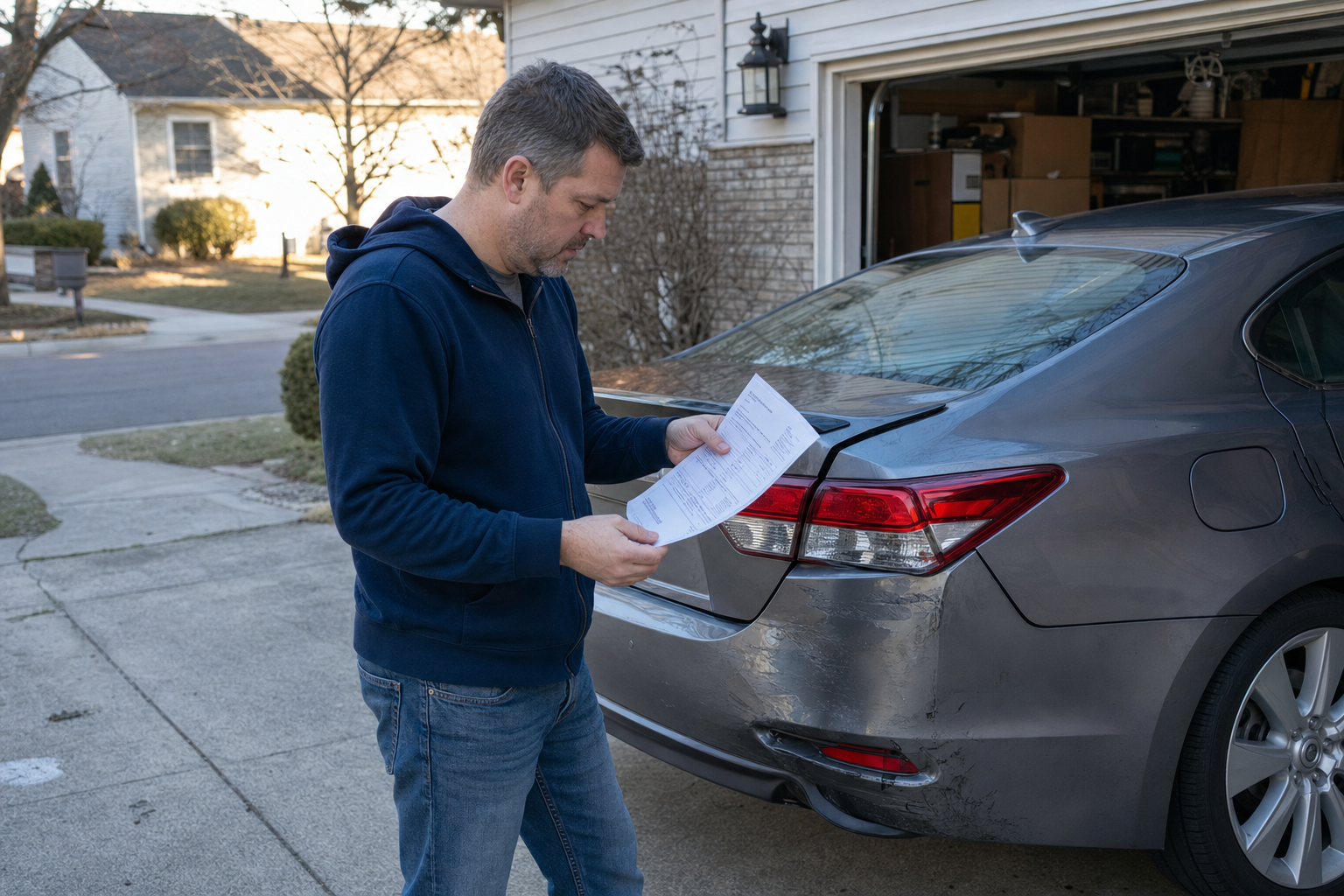
You’re standing in your driveway with a repair estimate in your hand.
The body shop says the bumper damage will cost more than you expected, but less than your deductible.
You’re wondering whether to call your insurer or pay out of pocket.
Filing a car insurance claim does not automatically raise your premium.
The outcome depends on the type of claim, who was at fault, your driving history, your insurer’s rating plan, and the rules in your state.
Whether a claim leads to a surcharge depends on your insurer’s filed rating plan, your state’s rules, and your specific circumstances.
A claim may also affect discounts or renewal terms under your policy.
Understanding how insurers evaluate claims helps you anticipate what might happen after you file and decide whether reporting a loss makes sense in your situation.
A claim is risk information, not an automatic penalty.
Insurers use claims history, driving record, location, and other factors to estimate future claim costs. A car insurance claim premium increase depends on how your insurer and state interpret that risk.
What decides whether a claim changes your rate
Insurers evaluate several factors when deciding whether to increase your premium after a claim.
Fault is often a significant consideration.
If you caused the accident, the insurer may apply a surcharge because the claim can signal risk, but the treatment depends on your insurer’s rating plan and state law.
The type of claim matters, too.
How insurers treat collision, comprehensive, at-fault, and not-at-fault claims varies by insurer and state.
The severity of the claim—measured by the payout amount and the damage involved—also plays a role.
The effect of a specific claim depends on the filed rating plan, claim classification, and applicable law.
Your prior driving and claims history can either cushion or amplify the effect.
A driver with a clean record may see a smaller increase or qualify for accident forgiveness if their policy includes it, while someone with multiple recent claims or violations may face a steeper surcharge or even nonrenewal.
State law and the insurer’s rating plan set the final boundaries.
Check with your state insurance department to understand the rules that apply to you.
Fault and claim type: the two biggest variables
An at-fault claim signals to the insurer that you were responsible for the accident, which may result in a surcharge at renewal depending on the insurer’s rating plan and your state’s rules.
The insurer may view the claim as evidence that you’re more likely to file another claim in the future, so it may adjust your rate to reflect that increased risk.
A not-at-fault accident—where another driver caused the collision—doesn’t always lead to a rate increase, but it can in some circumstances.
If your insurer’s rating model considers claim frequency regardless of fault, or if your state doesn’t prohibit increases for not-at-fault incidents, you may still see a higher premium.
Some jurisdictions restrict or prohibit premium increases for qualifying not-at-fault accidents.
Check with your state insurance department to confirm the current rules that apply to you and your specific claim.
Comprehensive claims—such as theft, vandalism, or weather damage—are often treated differently from collision claims, but the effect varies by insurer and policy.
Some comprehensive claims may have less impact, but the policy and insurer determine the result.
| Claim type | Typical effect on premium |
|---|---|
| At-fault collision | Effect depends on your insurer’s rating plan, your state’s rules, and your policy; may affect discounts |
| Comprehensive claim | Effect varies by insurer and policy; may affect discounts or renewal pricing |
| Not-at-fault accident | Effect varies by state law and insurer; some jurisdictions restrict increases for qualifying not-at-fault incidents |
Beyond the surcharge: discounts and renewal decisions
Even if your insurer doesn’t apply a formal accident surcharge, filing a claim can increase your total premium in other ways.
Many insurers offer claims-free or accident-free discounts.
Whether filing a claim affects your eligibility for these discounts depends on your specific policy and insurer.
A claim may also affect your renewal terms or eligibility for certain pricing programs, depending on the insurer’s underwriting and rating practices.
In some cases, repeated claims can contribute to a nonrenewal decision, although state law and insurer rules control when and how that can happen.
For example, a driver who files a comprehensive claim for hail damage may not receive a collision surcharge, but the overall renewal premium may change depending on the insurer’s rating plan and the policy’s discount structure.
Review your policy documents or contact your insurer to confirm how a claim will affect your discounts and renewal pricing.
How long the claim stays on your record
A car insurance claim may affect future renewals or rating decisions for a period that varies by insurer and state.
Insurers use claims history when calculating premiums and making renewal decisions.
The duration and effect depend on the insurer’s filed rating plan, the state, and the circumstances of the claim.
There is no single nationwide rule that establishes one mandatory period for all U.S. drivers.
Contact your insurer or state insurance department to understand how long a specific claim may influence your rate.
Accident forgiveness and state protections
Accident forgiveness is a feature some insurers offer that can limit the effect of a qualifying accident on your premium.
If your policy includes accident forgiveness and you meet the specific conditions, the insurer may waive or reduce the surcharge for a qualifying at-fault accident.
Availability, eligibility, and the types of accidents covered vary by insurer and policy.
Some insurers may include accident forgiveness for drivers who meet certain criteria, while others offer it as an optional add-on.
The number of accidents forgiven, eligibility requirements, and the availability of this feature all depend on the insurer’s specific program.
Check your policy documents or contact your insurer to confirm whether you have accident forgiveness and what conditions apply.
Some states also provide consumer protections that restrict how insurers can increase rates after certain types of claims.
These protections vary by jurisdiction, so check with your state insurance department to understand what applies to you.
Deciding whether to file or pay yourself
The decision to file a claim or pay for a repair out of pocket depends on several factors.
First, consider your deductible.
If the repair cost is close to or below your deductible, filing a claim may not provide a financial benefit.
Second, check your policy for reporting requirements.
Some policies may require you to report any accident or loss, even if you don’t plan to file a claim, so review your policy documents or contact your insurer to confirm what applies to you.
Failing to report when required can create problems later if a third party files a claim or if additional damage appears.
Third, consider potential third-party liability.
If another person or vehicle was involved, even in a minor way, a claim could arise later.
Reporting the incident protects you if that happens.
Fourth, weigh the potential effect on your premium and discounts.
If the repair cost is only slightly above your deductible and you have a clean record, paying out of pocket may preserve favorable renewal terms depending on your insurer’s rating plan and your policy’s discount structure.
There is no universal answer.
The right choice depends on the damage, your deductible, your insurer’s rules, and your state’s requirements.
- Does your policy require you to report this incident, even if you don’t file a claim?
- Could a third party file a claim later, and would paying out of pocket leave you exposed?
- Will filing this claim affect your discounts under your specific policy?
- How does the repair cost compare to your deductible and the potential premium increase?
- Does your state restrict premium increases for this type of claim?
What to do after a claim
If you’ve already filed a claim, review your renewal notice carefully when it arrives.
Look for changes to your premium, discounts, and coverage terms.
Compare quotes from other insurers at renewal to see whether you can find a better rate.
A claim with one insurer may have a different effect with another, depending on each company’s rating plan and underwriting guidelines.
If your premium increases significantly or your insurer decides not to renew your policy, contact your state insurance department to understand your options and confirm that the insurer followed state rules.
The effect of a car insurance claim on your premium depends on a combination of factors, many of which vary by state and insurer.
An at-fault accident may result in a surcharge, but even a not-at-fault or comprehensive claim can affect your renewal cost depending on your policy and state law.
No two situations are identical, so avoid assuming a claim will automatically raise your rate or that it won’t.
Check the facts that apply to your policy, your state, and your driving history before making a decision.
* Premium effects and state rules can change. Confirm current information with your insurer and your state insurance department. National Association of Insurance Commissioners