
What to know before opening a high yield savings account
The advertised rate is only the starting point—here's what else affects your return.
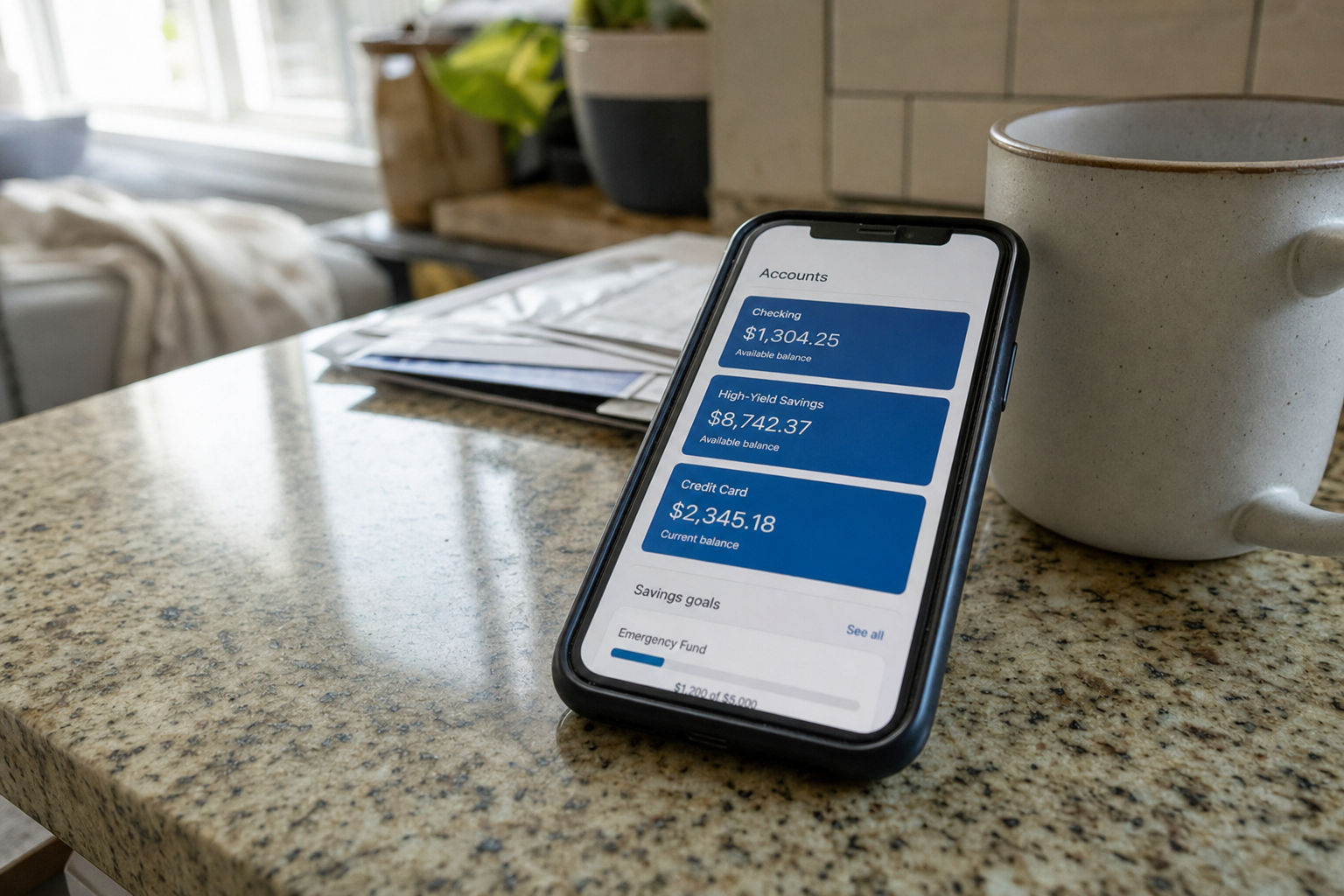
You’re comparing accounts online and one savings option shows an annual percentage yield several times higher than your current bank.
The number looks attractive, but you’re not sure what happens after you deposit your money—or whether that rate will stay the same.
A high yield savings account is a deposit account that generally pays more interest than a standard savings account.
The bank or credit union credits interest to your balance, and you can usually add or withdraw money under the institution’s rules.
The account remains liquid, meaning you’re not locking funds into a fixed term the way you would with many certificates of deposit.
But the yield, the fees, the access speed, and the fine print all vary by institution.
Understanding how the account works—and which details can reduce your actual earnings—helps you decide whether a particular account fits your situation.
Many high yield savings accounts use a variable rate, so the yield you see when you open the account can change at any time.
The institution can adjust the rate up or down as market conditions shift, and you’re not guaranteed the opening APY for any minimum period.
What happens to your money in a high yield savings account
You deposit funds into the account, and the institution pays interest on your balance according to the account’s annual percentage yield and compounding schedule.
APY is a standardized measure that reflects the total interest you would earn over one year if both the rate and your balance remained constant, incorporating the effect of compounding.
The specific calculation method and disclosure requirements are defined by federal regulation; check the Consumer Financial Protection Bureau’s official guidance on Truth in Savings disclosures for the current framework.
Compounding means previously credited interest can itself earn interest in future periods.
You can generally make additional deposits or request withdrawals under the terms of the account agreement.
The account does not typically require you to commit your money for a fixed term.
Because the account remains accessible, it’s often used for emergency funds or other short-term savings goals where you want to earn interest but may need the money on relatively short notice.
Why the rate you see today may not be the rate you keep
Many high yield savings accounts use a variable interest rate.
The institution can raise or lower the APY in response to changes in broader market conditions, central-bank policy, or competitive pressures.
When you open the account, the rate shown in the disclosure is a snapshot.
It is not locked in for any guaranteed period unless the account agreement explicitly states otherwise.
If benchmark rates fall, the yield on your account may fall as well.
If rates rise, the institution may increase the APY, but it is not required to do so immediately or by any specific amount.
Check the account agreement to confirm whether the rate is variable and how the institution communicates rate changes to account holders.
Deposit insurance: what it covers and what it doesn’t
When you hold a high yield savings account at an FDIC-insured bank, eligible deposits may be protected within federal insurance limits if the bank fails.
Coverage limits apply per depositor, per insured bank, for each account ownership category.
The specific limits and ownership categories are subject to federal rules; verify current coverage amounts and eligibility by using the FDIC’s official deposit insurance resources.
At a federally insured credit union, the NCUA provides share insurance under similar rules, covering eligible deposits—called shares—per share owner, per insured credit union, for each ownership category.
Check current share insurance limits and account types at the NCUA’s official share insurance page.
Deposit insurance protects eligible funds if the institution fails, subject to applicable limits and ownership rules.
It does not guarantee a particular APY, and it does not protect against the loss of purchasing power due to inflation.
Before opening an account, verify that the institution is federally insured by using the FDIC’s or NCUA’s official lookup tools.
Details that change how much you actually earn
The advertised APY is only part of the picture.
Several account features can affect your net return.
Some accounts charge a monthly maintenance fee unless you meet a minimum balance or maintain a qualifying relationship with the institution.
If the fee exceeds your monthly interest, you lose money.
Many accounts require a minimum opening deposit or a minimum ongoing balance to earn the stated yield.
If your balance falls below that threshold, the institution may pay a lower rate or charge a fee.
Promotional rates are common.
The high APY you see in an advertisement may apply only for a limited introductory period or only if you meet specific conditions, such as linking a checking account or setting up direct deposit.
After the promotional period ends, the rate may drop.
Some institutions tier their rates by balance.
You might earn the advertised yield only on balances within a certain range, with lower yields on amounts above or below that tier.
Withdrawal and transfer rules also matter.
Transaction limits on savings accounts can vary by institution and may be affected by federal rules.
Although the Federal Reserve amended Regulation D to remove the six-transfer limit enforcement requirement, individual banks and credit unions may still restrict the number of certain transactions per month or charge fees for exceeding their internal limits under their account agreements.
Check the Federal Reserve’s current regulations and your specific account terms to understand any withdrawal or transfer restrictions that may apply.
| Factor to review | Why it matters |
|---|---|
| Monthly fees | Can erase interest earnings, especially on smaller balances |
| Minimum balance | May be required to earn the advertised APY or avoid fees |
| Promotional vs. ongoing rate | Rate may drop after an introductory period |
| Balance tiers | Advertised yield may apply only to a portion of your balance |
| Withdrawal limits or fees | Can restrict access or add costs when you need your money |
Access: how quickly can you move your money
A high yield savings account is generally more accessible than a certificate of deposit, but the speed and method of access depend on the institution.
Some accounts let you initiate transfers through a mobile app or online banking, linking the savings account to an external checking account.
Others may require you to request a transfer by phone or in person.
Transfer processing times vary.
An electronic transfer between accounts at the same institution may complete within a business day, while a transfer to an account at another bank can take several business days.
If you’re planning to use the account for emergency savings, confirm the transfer method and typical processing time before you deposit your money.
An account with a high APY but slow access may not meet your needs if you require funds quickly.
Some institutions provide an ATM card linked to the savings account, but ATM access may be limited by network availability, daily withdrawal caps, or fees.
Questions to ask before you open an account
- Is the advertised APY variable, promotional, or conditional on meeting specific requirements?
- What fees does the account charge, and how can I avoid them?
- What minimum balance is required to earn the stated yield or avoid monthly charges?
- Are there limits on the number of withdrawals or transfers I can make each month?
- How do I access my money, and how long does a transfer typically take?
- Is the institution federally insured, and does my balance fall within coverage limits?
- If the rate is promotional, when does the introductory period end and what rate applies afterward?
A high yield savings account can be a useful place to hold money you want to keep accessible while earning more interest than a standard savings account provides.
The actual benefit depends on the account’s fee structure, balance requirements, rate stability, and access terms.
Read the account agreement and fee schedule before you open the account.
Confirm that the institution is federally insured by checking the FDIC’s or NCUA’s official verification tools.
If the advertised yield looks unusually high, check whether it is promotional, tiered, or conditional.
Compare the net return after fees and balance requirements, not just the headline APY.
* Account terms, rates, and fees change frequently. Verify current details in the institution’s official disclosures and confirm deposit insurance at FDIC.gov or NCUA.gov before opening an account.