
Uninsured Motorist Coverage: What It Protects and When It Pays
How UM and UIM coverage work when the other driver has no insurance or not enough.
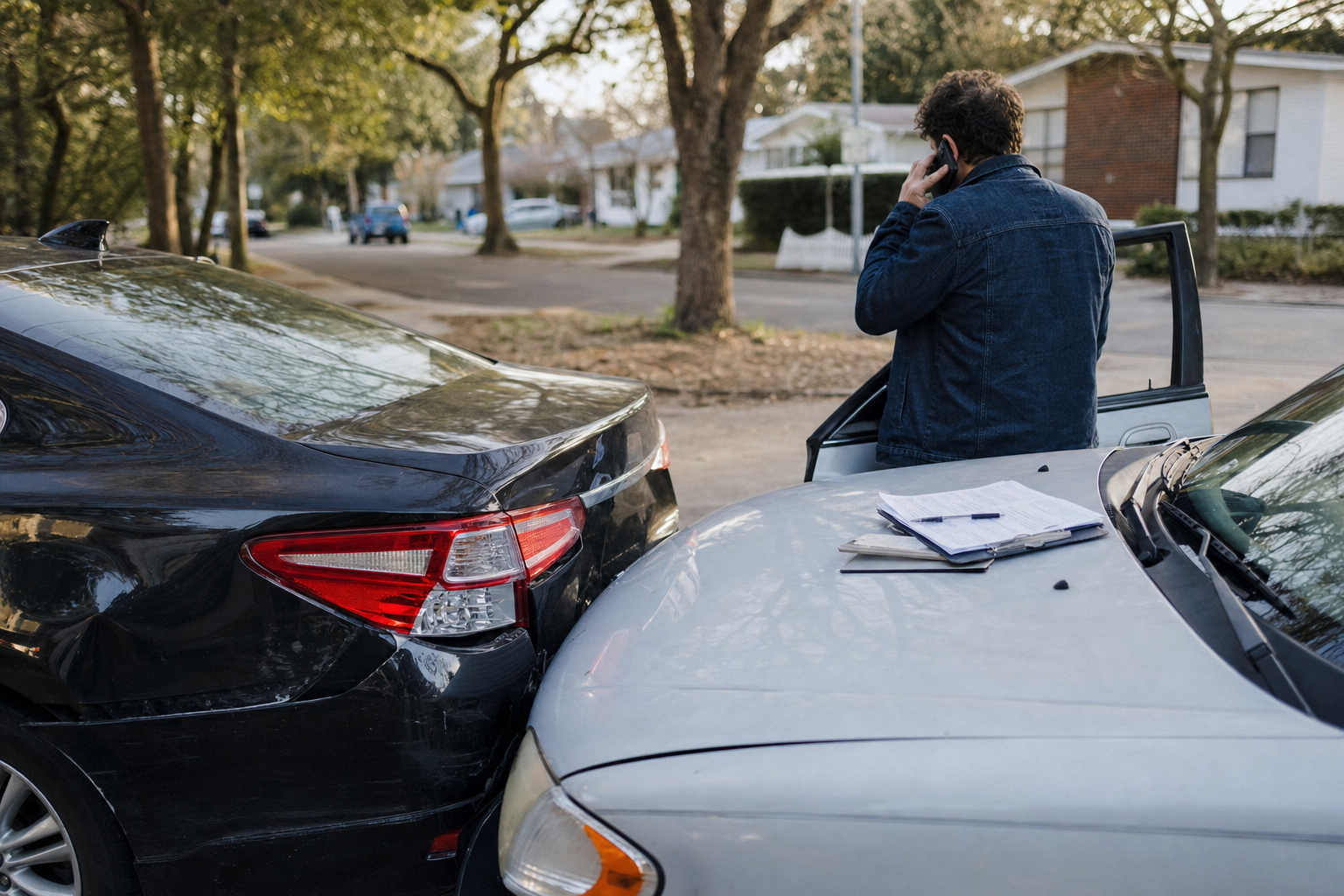
You’re stopped at a red light when another car rear-ends you.
The other driver apologizes and admits fault, but when you exchange information you discover they have no liability insurance.
Your medical bills arrive. Your car needs repairs.
The at-fault driver has no coverage to pay your claim.
This is the moment uninsured motorist coverage is designed for.
It protects you and eligible passengers when an at-fault driver has no liability insurance or, in the case of underinsured motorist coverage, when their policy limits fall short of your legally recoverable damages.
Understanding the difference between these two coverages, what each pays for, and how state rules affect your policy helps you make informed choices when you review or buy car insurance.
Uninsured motorist (UM) coverage applies when the at-fault driver has no liability insurance; underinsured motorist (UIM) coverage applies when the driver has insurance but not enough to cover your damages.
Both protect you and eligible passengers for bodily-injury losses such as medical expenses and lost wages, subject to your policy limits and state law.
What Uninsured Motorist Coverage Protects
Uninsured motorist bodily-injury coverage may help pay for bodily-injury losses when an at-fault driver has no liability insurance and you or eligible passengers are injured.
What qualifies as a covered bodily-injury loss—which may include medical expenses, rehabilitation costs, lost income, or other categories—depends on your policy terms and applicable state insurance law.
It does not automatically cover damage to your vehicle.
Bodily-injury UM and property-damage UM are separate coverages, and property-damage availability varies by state.
Eligibility for UM payment may depend on conditions established by your policy and state law, such as whether you are legally entitled to recover damages from the at-fault driver.
Payment is subject to your policy’s UM limits and the terms of your state’s insurance law.
When Underinsured Motorist Coverage Applies
Underinsured motorist coverage addresses a different scenario: the at-fault driver has liability insurance, but their policy limit is not enough to cover your legally recoverable damages.
Imagine the other driver’s liability limit is lower than your medical bills and lost wages.
UIM coverage can fill the gap up to your own policy’s UIM limit, after the at-fault driver’s insurer pays its maximum.
UIM does not guarantee full recovery of every loss.
Payment depends on your policy limit, the amount legally recoverable, and how your state defines and coordinates underinsured claims.
| Coverage | When It Applies |
|---|---|
| Uninsured Motorist (UM) | The at-fault driver has no liability insurance |
| Underinsured Motorist (UIM) | The at-fault driver has insurance, but the policy limit is insufficient to cover your damages |
Hit-and-Run Accidents and Pedestrian Injuries
Uninsured motorist coverage may apply to qualifying hit-and-run accidents, subject to state rules and policy conditions.
You generally must satisfy requirements for proving the accident and the involvement of an unidentified driver.
In some policies and jurisdictions, UM coverage can respond when an insured pedestrian is hit by an uninsured driver.
Check your policy and state insurance department guidance to confirm whether pedestrian injuries and hit-and-run claims are covered under your UM endorsement.
How State Rules Shape Your Coverage
Some states require uninsured motorist coverage, some require insurers to offer it with a rejection option, and others make it optional.
Underinsured motorist coverage and property-damage provisions also vary by state.
Whether UM or UIM must be purchased, the minimum limits, the availability of property-damage coverage, deductibles, claim procedures, and the definition of “underinsured” depend on applicable state law and policy terms.
No single nationwide rule applies.
Check your state insurance department’s website or contact the department directly to confirm the requirements and options in your jurisdiction.
What to Check in Your Policy
When you review or choose car insurance, verify the following points in your policy declarations and endorsements:
- What are your UM and UIM bodily-injury limits, and do they match or exceed your liability limits?
- Does your policy include uninsured motorist property-damage coverage, and if so, what is the deductible?
- Which passengers and household members are covered under your UM/UIM endorsement?
- What notice and claim procedures does your insurer require for a UM or UIM claim?
- Does your state allow stacking of UM/UIM limits across multiple vehicles on the same policy?
Answering these questions before an accident happens helps you understand what protection you have and whether you need to adjust your coverage.
Uninsured motorist coverage is not a replacement for the at-fault driver’s liability insurance.
It is your own safety net when that liability insurance is absent or insufficient.
Review your current policy, compare your UM and UIM limits to your potential medical and income-loss exposure, and confirm your state’s rules with your insurance department.
That preparation puts you in a stronger position if you ever need to file a claim.
* Coverage requirements, definitions, and claim rules vary by state and may change. Confirm current rules with your state insurance department: NAIC state insurance department directory.