
Steps to Take After a Collision: Navigating Your Claim
What to do at the scene, how to notify your insurer, and how the adjuster reviews your case.
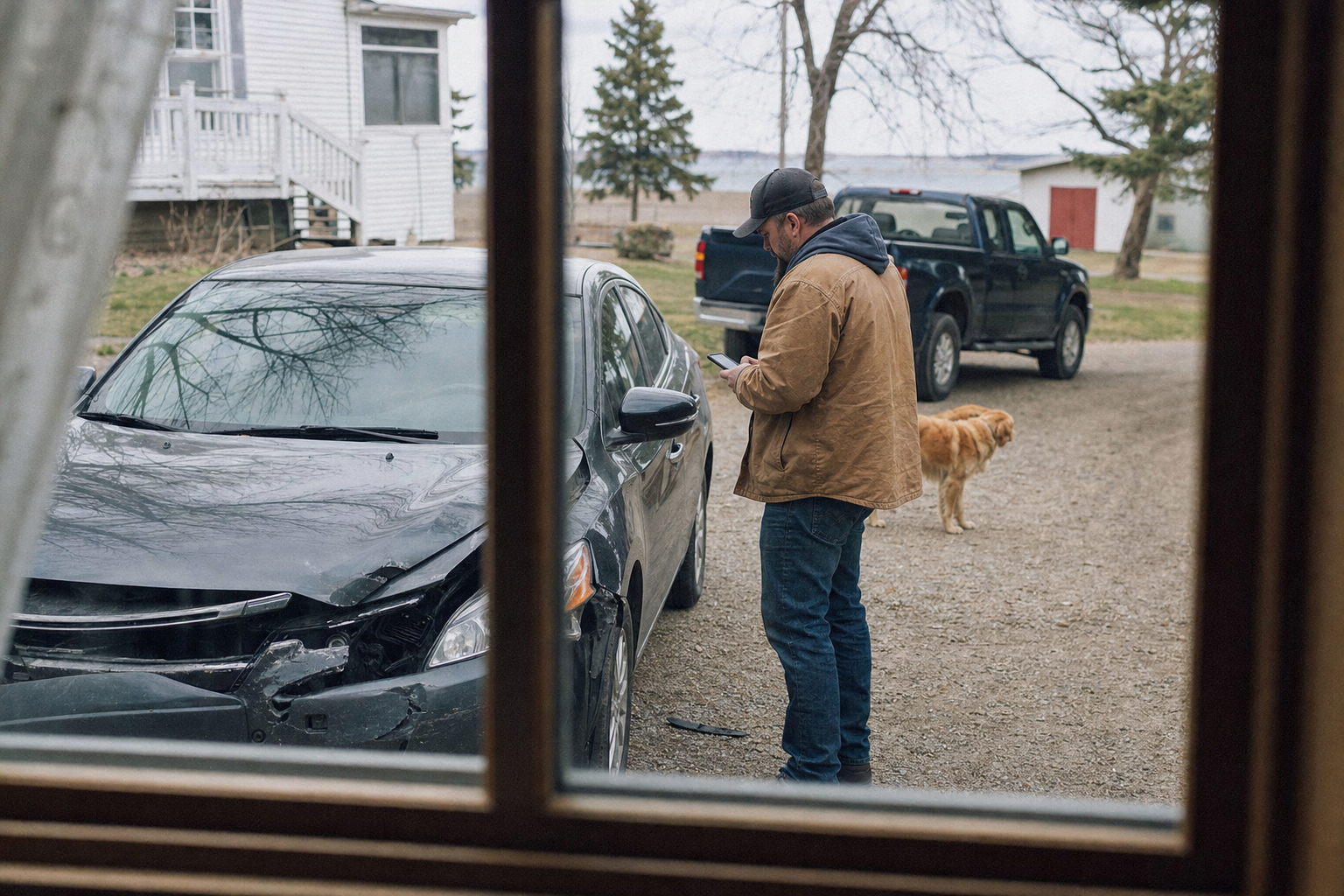
You pull into a parking space, hear a crunch, and realize another driver just backed into your door.
Or you’re waiting at a red light when you feel the jolt of a rear-end collision.
The car insurance claim process starts the moment the accident happens, but filing a claim and simply reporting the incident are not the same thing.
Your insurer can explain your coverage, answer questions about your deductible, and walk you through inspection or repair options before you decide how to proceed.
This guide covers what to do at the scene, how to document the damage, when to contact your insurer, and how the adjuster reviews your case.
Notifying your insurer typically does not automatically open a formal claim or change your premium.
Prompt notification lets the insurer explain your options, preserve evidence, and meet any policy deadlines, even when you are still deciding whether to seek payment.
Protect Everyone at the Scene
Move your vehicle out of traffic if it is safe to do so and the car can still be driven.
Turn off the engine.
Check yourself and any passengers for injuries.
When anyone is hurt or an emergency exists, seek medical assistance according to your state’s emergency procedures and local requirements.
Do not leave the scene.
Leaving may trigger penalties under the laws of your state.
Consequences depend on your jurisdiction and the specific circumstances of the accident.
If the police arrive, cooperate fully and provide factual details.
Avoid speculating about fault or making promises about payment.
Collect Information from All Drivers
Exchange names, phone numbers, addresses, driver’s license numbers, license-plate numbers, and insurance information with the other drivers involved.
Write down the make, model, and color of each vehicle.
If the other driver does not have insurance information at the scene, record as much identifying detail as possible.
Stick to factual information.
Do not admit fault, apologize for the accident, or discuss coverage limits with the other driver.
If witnesses are present, ask for their names and contact information.
Their account may support your version of events during the car insurance claim process.
Record What You See and Hear
Take photographs or video of all vehicle damage, the surrounding area, road conditions, traffic signs, skid marks, and any property damage.
Capture license plates, street signs, and the position of the vehicles if they have not been moved.
If it is safe and appropriate, photograph visible injuries.
Write down what you remember while the details are fresh: the time, weather, what each driver was doing, and the sequence of events.
If a police officer responds, ask for the report number or incident number.
This documentation becomes part of the evidence the claims adjuster will review.
Reach Out to Your Insurer
Contact your insurance company as soon as possible after the accident, even when the other driver appears to be at fault.
You can report the incident by phone, through the insurer’s website, or using its mobile app when those channels are available.
Provide the date, time, and location of the accident, a description of what happened, your policy number, the other driver’s information, the police report number if you have it, and any photographs or witness details.
Prompt notification helps the insurer preserve evidence, meet any policy deadlines, and assign an adjuster when you do open a claim.
Work with the Claims Adjuster
Once you open a claim, the insurer may assign a claims adjuster to investigate.
The adjuster’s role and procedures vary by insurer and by policy.
The adjuster typically inspects vehicle damage, investigates the claim, and estimates repair costs.
Cooperate fully and provide any additional information requested.
Coverage and fault determinations depend on your policy terms, the facts of the accident, and state law.
The car insurance claim process can follow two different paths:
| Claim Type | Description |
|---|---|
| First-party claim | You seek payment under your own policy for coverages you purchased, subject to policy terms and state law. |
| Third-party claim | You seek payment from the other driver’s insurer when that driver may be liable and their coverage may apply, subject to state law and policy terms. |
Which route is available depends on state law, fault determination, and the coverages in force.
Your insurer can explain which option applies to your situation.
Coordinate Repairs and Inspection
Protect the vehicle from additional damage, but do not authorize permanent repairs before coordinating with your insurer when the policy or insurer requires inspection or approval.
The insurer may send an appraiser to inspect the vehicle, request repair estimates, or direct you to a preferred repair shop.
The ability to choose your own repair shop depends on your state’s law, your policy, and your insurer’s procedures.
Contact your insurer to understand the options available to you.
If the vehicle is declared a total loss, the insurer will offer a settlement based on the applicable coverage, policy terms, vehicle valuation, your deductible, and any salvage considerations under state law.
A deductible is the amount you pay out of pocket before your policy pays the loss.
Whether damage is covered depends on the policy, circumstances, exclusions, and state law.
When a Claim Stalls or Gets Denied
If your claim is delayed, disputed, or denied, ask the insurer to clarify the reason.
Review your policy carefully.
Check with your insurer about its complaint or appeal procedures.
Contact your state insurance department to learn what assistance or dispute-resolution options may be available to you.
The remedies available to you depend on state law, your insurer’s procedures, the policy language, and the facts of your case.
Preserve all communications, photographs, estimates, and receipts.
Understanding the car insurance claim process before an accident happens can reduce stress and help you protect your rights when it matters most.
Review your policy now, know what coverage you have, and save your insurer’s contact information where you can find it quickly.
If an accident does occur, prioritize safety, document thoroughly, and communicate promptly with your insurer and the appropriate state agencies.
* Accident-reporting requirements, claim deadlines, and coverage rules vary by state and policy. Confirm the current rules with your insurer and your state insurance department.