
Missed Car Loan Payment: Timeline, Consequences, and Next Steps
What happens after you miss a payment depends on your contract and state law.
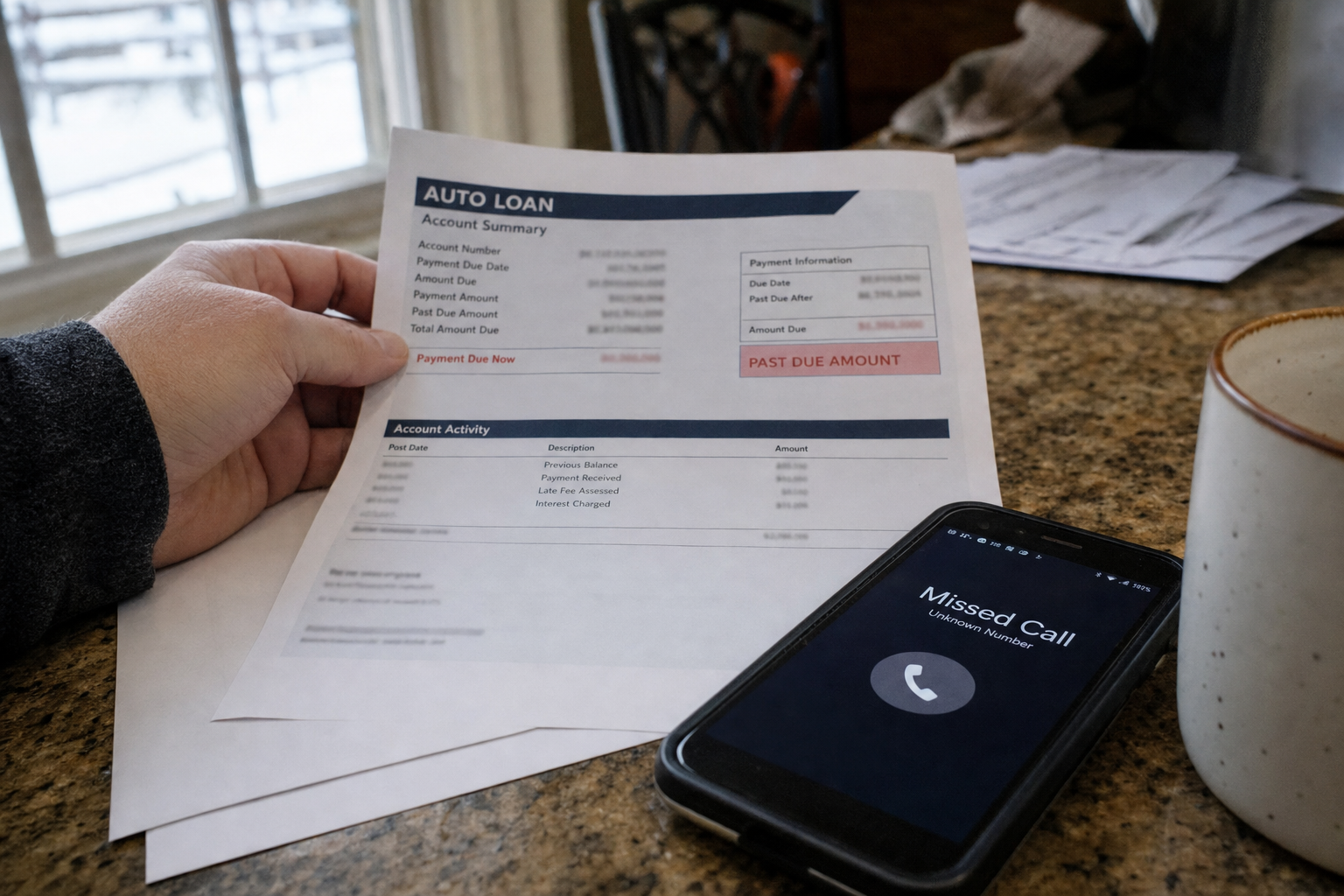
The payment was due three days ago.
Your checking account was short, the transfer didn’t clear in time, and this morning the lender’s number appeared on your phone.
You’re wondering what has already happened to your account, what will happen next, and how much time you have to fix it.
A missed car loan payment does not follow one nationwide script.
The consequences—late fees, credit reporting, default, and repossession—depend on the loan contract you signed and the laws of your state.
This article walks through the typical sequence of events after a missed car loan payment, explains when each consequence may occur, and shows you what to check in your own documents and state rules.
Speed matters.
The sooner you understand your contract and contact your lender, the more options you may have.
One missed payment does not automatically mean repossession.
Repossession timing is controlled by your loan agreement and state law, not by a single rule that applies to every borrower in the United States.
The first 24 hours after the due date
When the due date passes without payment, your loan enters delinquency.
What happens immediately depends on whether your contract includes a grace period.
Whether any grace period exists, how long it lasts, whether a late fee applies, and the conditions that trigger the fee are all determined by your loan contract and applicable state law.
Check your loan agreement for the section on late payments.
If your contract does not include a grace period, or if you pay after any grace period expires, the lender may charge a late fee permitted by your contract and state law.
At this stage, the account is delinquent but not yet in default.
Default is a separate status, typically triggered by a longer period of nonpayment or a specific breach defined in your loan agreement.
When the lender reports to credit bureaus
A missed car loan payment does not appear on your credit report the day after the due date.
Lenders generally report delinquency once the account is significantly past due, and many wait for a set period before notifying the bureaus.
Reporting practices vary by lender.
Some offer internal forbearance or wait longer before notifying the bureaus.
Your loan agreement and the lender’s policies control when and how delinquency is reported.
Once a late payment is reported, it can remain on your credit report and may lower your credit score.
The impact depends on your overall credit history and how late the payment becomes.
If you are approaching the reporting threshold, contact your lender to ask when they will report and whether any payment arrangement can prevent it.
From delinquency to default
If you continue to miss payments, the loan may enter default.
Default can occur after one missed payment or several, depending on the terms of your contract.
Your loan agreement defines what constitutes default.
Common triggers include a specific number of days past due, failure to maintain insurance on the vehicle, or other breaches of the contract terms.
Once the loan is in default, the lender may accelerate the debt—demanding immediate payment of the full remaining balance—and may have the right to repossess the vehicle.
The lender may also contact you by phone, mail, or email to collect the overdue amount.
The lender may send the account to an internal collections department, assign it to an outside collections agency, or sell the debt to a third-party collector.
Default, collections activity, and repossession are distinct steps that depend on your contract and the lender’s policies.
Repossession is not automatic and does not always follow collections.
Repossession: timing and state law
Repossession rules vary by state.
Whether a lender must send advance notice before repossession, whether you have a right to cure the default, and what process the lender must follow depend on the law of your state and the terms of your loan contract.
Check your state’s consumer protection agency or attorney general’s website for current repossession procedures in your jurisdiction.
In many jurisdictions, because the vehicle secures the loan, the lender may repossess without first obtaining a court order after default, subject to state law and your contract terms.
The repossession cannot involve a breach of the peace.
This means the lender or the repossession agent cannot break into a locked garage, use physical force, or threaten you during the process.
If you are at risk of repossession, contact your lender immediately.
Many lenders offer payment arrangements, deferral, or restructuring options for borrowers facing temporary financial difficulty.
Voluntary surrender is another option.
You return the vehicle to the lender, which may reduce repossession costs, but it does not eliminate your obligation to pay any remaining balance after the vehicle is sold.
After repossession: sale and deficiency
After repossession, the lender typically sells the vehicle at auction or through a private sale.
The proceeds are applied to the outstanding loan balance, repossession costs, storage fees, and any other charges allowed by your contract and state law.
If the sale does not cover the full amount owed, you may be responsible for the deficiency balance.
A deficiency is the difference between what you owe and what the lender recovers from the sale.
Whether and how a lender can pursue a deficiency judgment depends on applicable state law and whether the lender complied with all repossession and sale requirements under your contract and state commercial law.
Check your state’s consumer protection resources or consult a consumer law attorney for the rules in your jurisdiction.
The lender may be required to provide reasonable notice before selling the vehicle.
Under applicable law, you may have a right to redeem the vehicle before it is sold by paying the full amount owed plus repossession and storage costs.
Whether redemption is available, what you must pay, and how long you have to exercise this right depend on your state’s law and your loan contract.
Confirm your redemption rights with your lender or by reviewing your state’s repossession statutes.
An unpaid deficiency balance may be reported to credit bureaus, which can significantly damage your credit score.
What to do the moment you know you’ll miss a payment
The first step is to contact your lender as soon as you realize you will miss a payment or have already missed one.
Explain your situation and ask what options are available.
Ask for specific information about your account.
Document the conversation, including the name of the representative, the date, and any agreements or next steps.
| Ask your lender | Document in writing |
|---|---|
| What is the current status of my account? | Date and time of the call |
| What fees have been charged? | Name and ID of the representative |
| When will this delinquency be reported to credit bureaus? | Any payment arrangement offered |
| What payment amount or plan will bring my account current? | Confirmation that the arrangement stops further fees or repossession |
| Will this arrangement stop repossession and protect my credit? | Written confirmation before you make any payment |
If the lender offers a payment arrangement, get it in writing before you make any payment.
Confirm that the arrangement will stop further late fees, prevent repossession, and protect your credit reporting status if you comply with the new terms.
If you cannot reach an agreement with your lender, consider consulting a nonprofit credit counselor or a consumer law attorney.
Where to check your state’s rules
Repossession procedures, notice requirements, deficiency-balance collection, and late-fee limits vary by state.
Your loan contract and state law together determine your rights and obligations.
Start by reviewing your loan agreement.
Look for sections on default, repossession, late fees, and grace periods.
Check your state’s consumer protection agency or attorney general’s website for information on auto-loan and repossession laws.
Many states publish consumer guides that explain notice requirements, redemption rights, and deficiency rules.
Free or low-cost credit counseling is available through accredited organizations.
If you are facing repossession or a deficiency lawsuit, consider consulting a consumer law attorney in your state.
A missed car loan payment does not automatically mean repossession or long-term credit damage, but the outcome depends on how quickly you act and what your contract and state law allow.
Every loan and every state is different.
Review your loan documents, contact your lender immediately, and confirm your rights under your state’s laws.
Taking these steps gives you the best chance to protect your vehicle, your credit, and your financial options going forward.
* Loan terms, fees, reporting practices, and repossession rules vary by lender and state. Confirm current details with your lender and your state’s consumer protection agency. For federal guidance, visit the Consumer Financial Protection Bureau.