
How to Get and Use a Payoff Quote to Pay Off Your Car Loan Early
The amount you need to close the loan isn't always the balance you see on your statement.
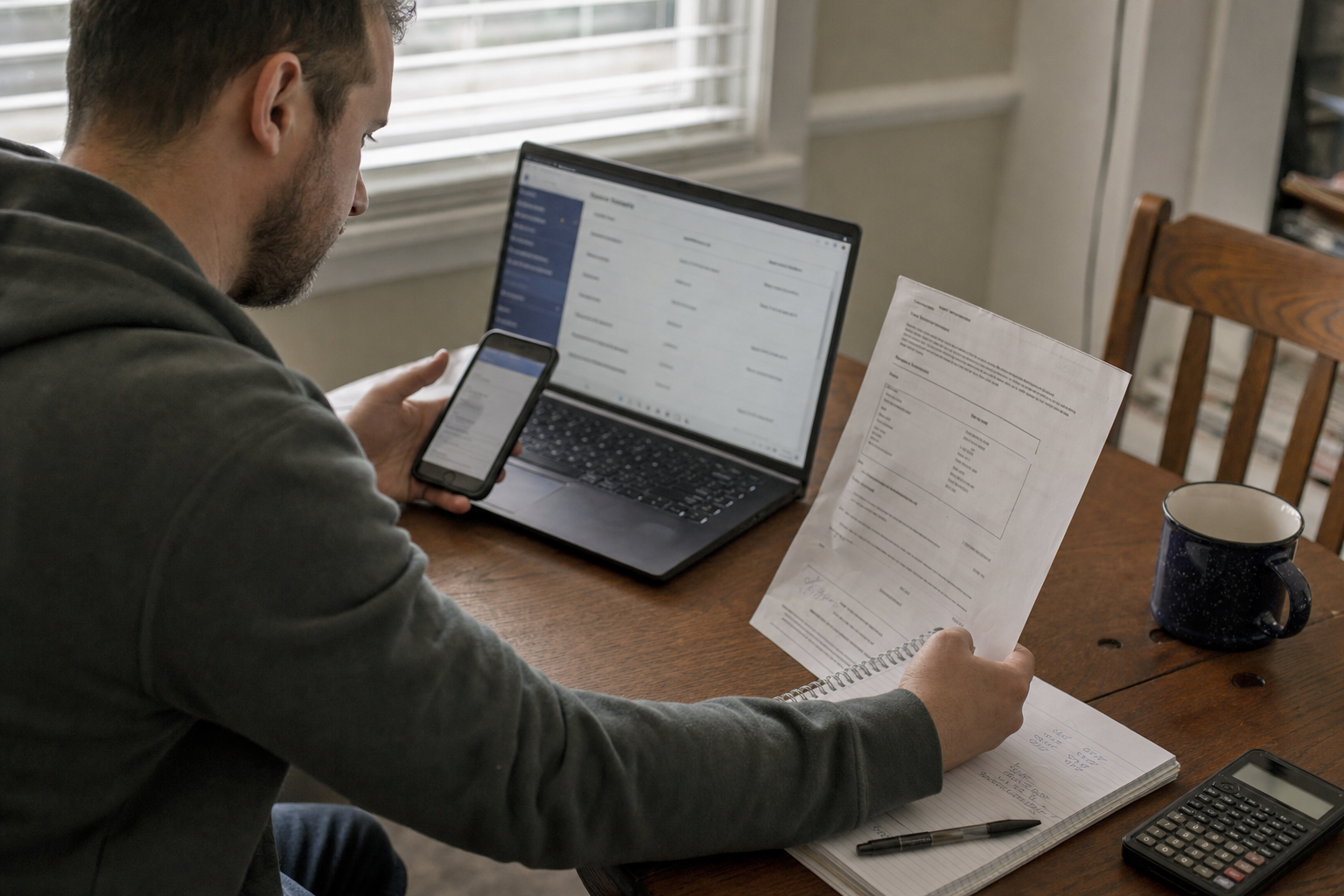
You’ve decided to pay off your car loan early—maybe you received a bonus, sold another asset, or simply want to eliminate the monthly payment.
You log in to your lender’s account, see a balance, and assume that’s the number to send.
A week later, the lender tells you the payment was short and interest kept accruing.
The balance on your monthly statement is not the same as the amount required to close the loan.
That exact figure is called a payoff quote, and it accounts for interest that has built up since your last statement, any unpaid fees, and the specific date the lender will receive your payment.
Understanding how the quote is calculated, how to request it, and what to do after you pay ensures the loan is fully settled and you don’t owe surprise charges later.
A payoff quote is the lender’s exact amount to close your loan on a specific date—and it’s almost always different from your statement balance.
The quote includes accrued interest, fees, and any other charges the lender requires to mark the account paid in full. It also has a deadline: if your payment arrives after that date, you may owe additional interest.
Why the Balance on Your Statement Isn’t the Payoff Amount
Many auto loans use simple interest, which accrues on the outstanding principal.
Your monthly statement shows the principal balance as of the statement date, but interest continues to accumulate every day until the lender processes your payment.
If your statement closed two weeks ago and you send a check today, those two weeks of interest are not reflected in the statement balance.
The payoff quote adds that accrued interest to the principal, along with any late charges, unpaid fees, or other amounts the lender requires to close the account.
Example: Your statement shows a principal balance of $8,200.
By the time you request a payoff quote, another $45 of interest has accrued, and there’s a $15 processing fee.
The payoff quote is $8,260, not $8,200.
The Consumer Financial Protection Bureau explains that the amount remaining to pay off a loan may differ from the balance on your monthly statement or payment coupon book because of how interest is calculated, outstanding late fees or other charges, or other reasons.
For more information, see the CFPB guidance on loan payoff amounts.
What a Payoff Quote Includes
A payoff quote is the lender’s calculation of what you owe to close the loan completely on a particular date.
It typically includes the remaining principal, interest accrued through the payoff date, any unpaid late fees, and other charges specified in your contract.
The quote will state a “good-through” or expiration date.
That date is the last day the quoted amount is accurate.
If the lender receives your payment on or before that date, the amount should be sufficient to close the loan.
If your payment arrives later, additional interest will have accrued and the lender may require a revised quote or an extra amount to cover the additional days.
Some lenders also show a per-diem interest figure—the daily interest charge on your remaining balance.
Knowing that number helps you estimate the cost of a one- or two-day delay if you cannot meet the original deadline.
How to Request a Payoff Quote
Contact your lender and specify the date you plan to pay.
The lender will calculate the total amount due on that date and provide a written or electronic quote.
When you request the quote, ask for the total payoff amount, the expiration or good-through date, any per-diem interest charge, and the lender’s payment instructions.
Payment instructions matter: some lenders may require a wire transfer or certified check, and some may have a cutoff time on the payoff date.
If you request the quote online, the system may generate it instantly.
If you call or write, the lender may take time to prepare the document.
Always request the quote in writing—whether as a PDF in your account portal or a letter—so you have a record of the amount and the date it was valid.
Do not assume the quote is valid indefinitely.
If your plans change and you need to delay payment, contact the lender for a revised quote rather than sending the original amount after the expiration date.
The Quote’s Expiration Date and What Happens After
The payoff quote is accurate only through the date the lender specifies.
If your payment is received and processed by that date, the amount should be sufficient.
If the payment arrives even one day late, additional interest will have accrued.
Example: Your quote is valid through November 15 and shows a payoff amount of $6,340 (hypothetical figure).
You mail a check on November 14, but the lender receives it on November 18.
The lender applies the $6,340 to your balance, but three days of additional interest—say, $4.50 (hypothetical figure)—remains unpaid.
The account is not closed, and you owe that $4.50 plus any interest that continues to accrue.
To avoid this, follow the lender’s payment instructions exactly and allow enough time for the payment to be received and processed.
If you know you will miss the deadline, request a new quote before you send the payment.
Checking Your Contract for a Prepayment Penalty
Not every auto loan allows you to pay off your loan early without a fee.
A prepayment penalty is a charge the lender imposes if you close the loan before its scheduled maturity.
Whether your loan includes this penalty depends on the contract you signed and the laws in your state.
Review the retail installment contract or loan agreement you received at closing.
Look for a section labeled “prepayment” or “early payoff.”
If the contract is silent or you cannot find it, contact the lender and ask directly whether a prepayment penalty applies and, if so, how much it is.
The Consumer Financial Protection Bureau states that the contract and state law govern prepayment penalties.
Check whether the penalty amount appears in your payoff quote; if not, ask the lender to confirm.
Knowing the penalty in advance lets you decide whether paying off the loan early still makes financial sense.
Do not assume your loan is penalty-free.
Verify before you send a large payment.
Making Sure Extra Payments Reduce Principal
If you plan to make extra payments over time rather than a single full payoff, you need to confirm that the lender applies those extra funds to principal.
The Consumer Financial Protection Bureau explains that auto-loan payments are generally applied first to fees, then to interest, and then to principal, subject to the loan documents and applicable requirements.
An extra payment made without instruction may not reduce your balance as expected.
Check your loan contract and the lender’s payment-allocation policy.
When you make an additional payment, look for an option in the online payment portal to designate the funds for principal reduction, or include a note with a mailed check stating that the extra amount should be applied to principal.
After the payment posts, log in and verify that the principal balance decreased by the amount you sent.
If the balance did not drop as expected, contact the lender and ask how the payment was applied.
For more information, see the CFPB auto-loan key terms.
| What to verify | What can go wrong |
|---|---|
| Principal balance dropped by the extra amount | Payment was applied to future interest or advanced the due date |
| Next statement shows lower interest charge | Interest continued to accrue on the original balance |
| Lender confirmed principal-only instruction | No record of your instruction, payment treated as regular |
After You Pay: Confirming the Loan Is Closed
Once the lender receives and processes your payoff payment, log in to your account and verify that the balance shows zero.
Request written confirmation that the loan is closed and retain the receipt or letter for your records.
If your vehicle has a lien, the lender will release it according to procedures that vary by state and lender.
Contact the lender to confirm the lien-release process and what documentation you should expect.
Also confirm the process with your state motor-vehicle agency to understand whether the title will be sent to you or updated electronically and what steps you need to take.
Ask the lender what to expect, confirm your mailing address is current, and follow up if you do not receive the documentation within the stated period.
Check your credit report after the payoff to confirm that the lender reported the account as paid in full.
If the account still shows an outstanding balance or is not marked closed, contact the lender and ask them to update the report.
Paying off an auto loan early can reduce the total interest you pay and free up monthly cash flow once the account is fully closed.
Before you commit the funds, consider whether the money could serve a higher priority, such as building an emergency fund or paying down higher-interest debt.
If your loan has a low interest rate and you have other financial goals, keeping the loan and using the cash elsewhere may make more sense.
The right choice depends on your overall financial picture.
If you decide to pay off the loan, understanding how payoff quotes work ensures the process goes smoothly and the debt is fully closed.
Request the quote in writing, verify all the details, follow the lender’s payment instructions, and confirm that your account shows a zero balance afterward.
* Payoff amounts, fees, and lender procedures can change. Always confirm current details with your lender and review your loan contract before making a payment. For general guidance, see the Consumer Financial Protection Bureau.