
Buy now pay later credit: what it means for your monthly obligations and credit file
Each plan creates a future payment. How those payments stack up—and whether they appear on your credit report—depends on the provider.
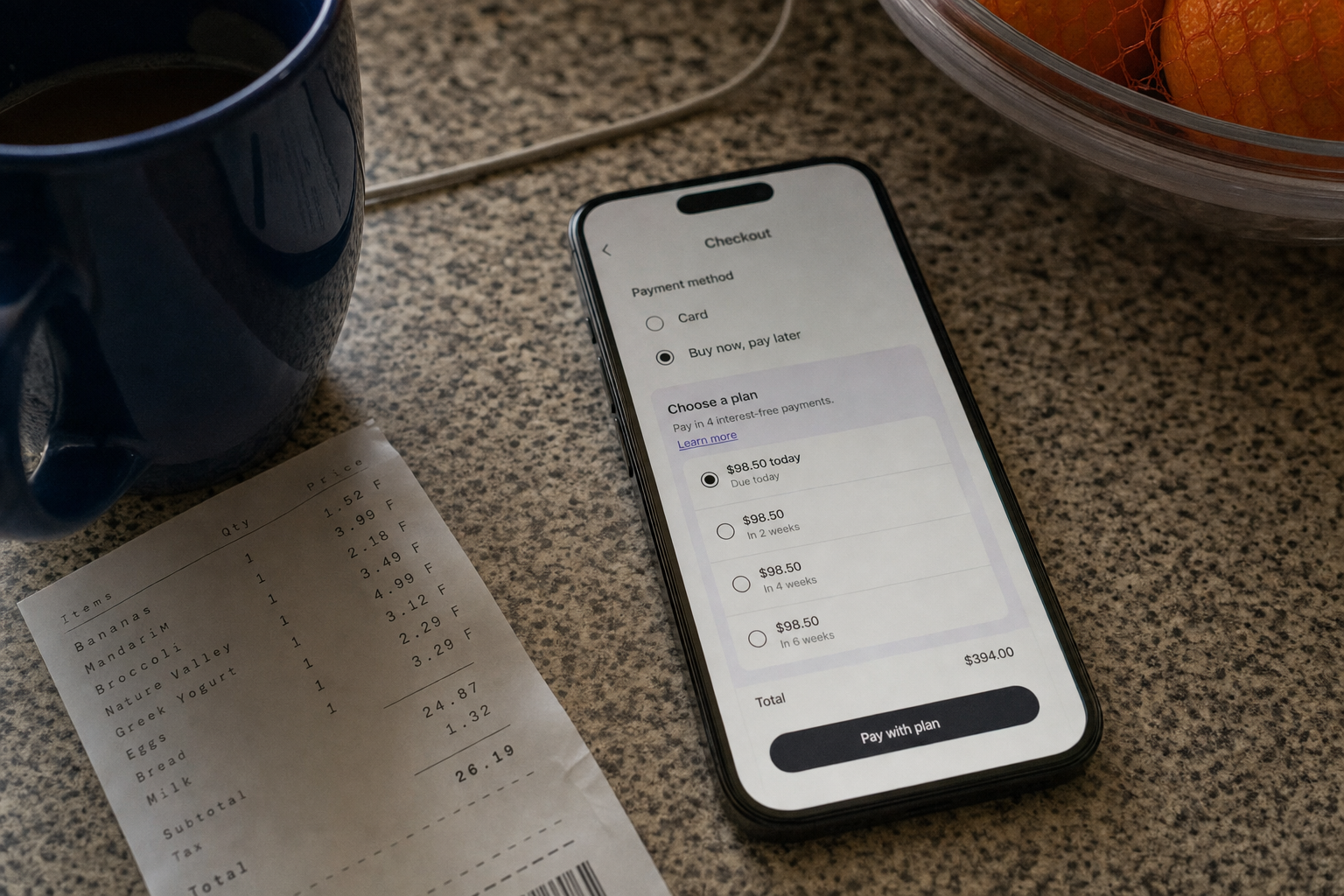
You’re checking out online and the total is higher than you want to pay today. At the payment screen, an option appears: split the purchase into four payments, the first due now, the rest over the next six weeks.
No interest if you pay on time.
That offer is buy now pay later credit. It can make a purchase fit your cash flow this month, but it also locks you into a schedule of future payments.
Before you click accept, you need to know how the plan works, what happens if you miss a payment, and whether the account will show up on your credit report. The answers vary by provider and product, and the landscape continues to evolve.
The core trade-off: smaller payments now mean more obligations later.
Buy now pay later credit spreads one purchase across multiple due dates. That can help short-term budgeting, but it also increases the total number of payments you owe each month—especially if you open several plans at once.
What happens when you open a plan
Buy now pay later credit is short-term installment financing offered at the point of sale. You receive the product immediately and agree to repay the amount in scheduled installments.
One common example is a pay-in-four plan: you make an initial payment at checkout, then three additional payments at regular intervals. The schedule, the number of installments, and whether interest or fees apply depend on the provider and the specific plan.
This is not a discount. The total you repay typically equals the purchase price, and you are entering a credit obligation with fixed due dates.
Many pay-in-four plans do not charge interest when you follow the schedule, but late fees and other charges can still apply. The exact terms are in the agreement you accept at checkout.
How it shows up in your monthly budget
Each plan you open adds a recurring payment to your monthly obligations. The individual installment may look small, but multiple plans can add up quickly.
Example: you open three plans in the same month—one for a jacket, one for a phone accessory, one for a kitchen appliance. Plan A requires two payments this month, plan B requires one, and plan C requires one.
Next month, all three plans have payments due. The combined total may exceed what you budgeted for discretionary spending.
Because the plans are often separate accounts, it is easy to lose track of how much you owe in total and when each payment is due.
Before you use buy now pay later credit, add up all your existing installment payments and confirm that another plan fits comfortably into your available cash flow. If the purchase would strain your budget even with installments, the plan does not make it more affordable—it delays the strain.
The changing relationship with credit reports
Opening a standard pay-in-four plan typically does not require a hard credit inquiry, but underwriting practices vary by provider and product. Check the provider’s policy before you apply.
Most pay-in-four buy now pay later plans generally do not report your routine payment history to credit bureaus. Some providers report account activity for certain products, but reporting practices vary by provider, product, bureau, and timing.
You cannot assume that a plan will remain invisible to credit bureaus. When a provider does report, the account may appear on your credit report, and your payment behavior may influence your score depending on how the bureau and the scoring model treat the account.
Unpaid balances may be reported to credit bureaus after the lender refers the debt to a collection agency. If the lender or collection agency reports the account, it may affect your credit score depending on the scoring model.
| Scenario | Possible outcome |
|---|---|
| On-time payment | Most pay-in-four plans do not report routine payments; for plans that do report, the scoring model must incorporate the data for it to affect your score. |
| Missed payment | May trigger fees, account restrictions, collections, or credit damage if the provider reports the delinquency, refers the account to a collection agency that reports, or if the debt appears on your credit report and the scoring model incorporates it. |
When a missed payment costs you
Missing a payment can trigger several consequences. You may face late fees, lose the ability to open new plans with that provider, or see the account sent to a collection agency.
Whether a missed payment also damages your credit score depends on whether the provider reports the delinquency to a bureau and whether the scoring model you are subject to incorporates that data.
If the lender or a collection agency reports the debt, a collection account may appear on your credit report and affect your score depending on the scoring model. The exact consequences vary by provider and plan, so read the terms carefully.
To avoid missing a due date, set up reminders or, if the provider offers it, automatic payments. If you cannot make a payment, contact the provider immediately to ask about options.
Comparing buy now pay later credit to a credit card
Whether buy now pay later credit is cheaper than a credit card depends on the total cost under the specific agreements you are comparing.
A pay-in-four plan with no interest and minimal fees can cost less than a credit card if you would carry a balance and incur interest charges. But if you already have a credit card with a low rate or a promotional zero-interest period, using the card may offer more flexibility.
Federal law provides credit card holders with specific dispute protections under the Fair Credit Billing Act. Buy now pay later providers offer dispute and refund protections, but the specific procedures and coverage depend on the provider’s agreement and the product.
Payment flexibility also varies. Some plans allow early payoff without penalty, while others may have different terms.
Review the provider’s agreement before you commit.
The right choice depends on your budget, your existing credit, and whether you can pay off the balance before interest accrues.
- Can I afford the total purchase price today, or am I using this plan because I do not have the cash?
- Do I know the exact payment schedule, all applicable fees, and whether this provider reports to credit bureaus?
- How many other plans do I have open, and what is my combined monthly payment?
- What happens if I miss a payment—will I face fees, account restrictions, collections, or credit-bureau reporting?
- Would a credit card or another financing option give me more flexibility or different protections?
Buy now pay later credit is a tool, not a solution to a budget shortfall. It may work when you already have the money to cover the purchase and prefer to spread the payments for cash-flow reasons, and when the plan’s terms align with your financial goals.
Track every plan you open. Write down the due dates and payment amounts, or use a budgeting app that tracks recurring expenses.
If the combined payments exceed your available income, you risk missing a payment and triggering fees or credit damage.
* Provider policies, fees, and credit-reporting practices can change. Check the provider’s current agreement and review your credit reports at AnnualCreditReport.com for the most accurate information.