
Negotiate car price: focus on the final number, not the payment
Compare written quotes, separate financing from the vehicle price, and review every fee before signing.
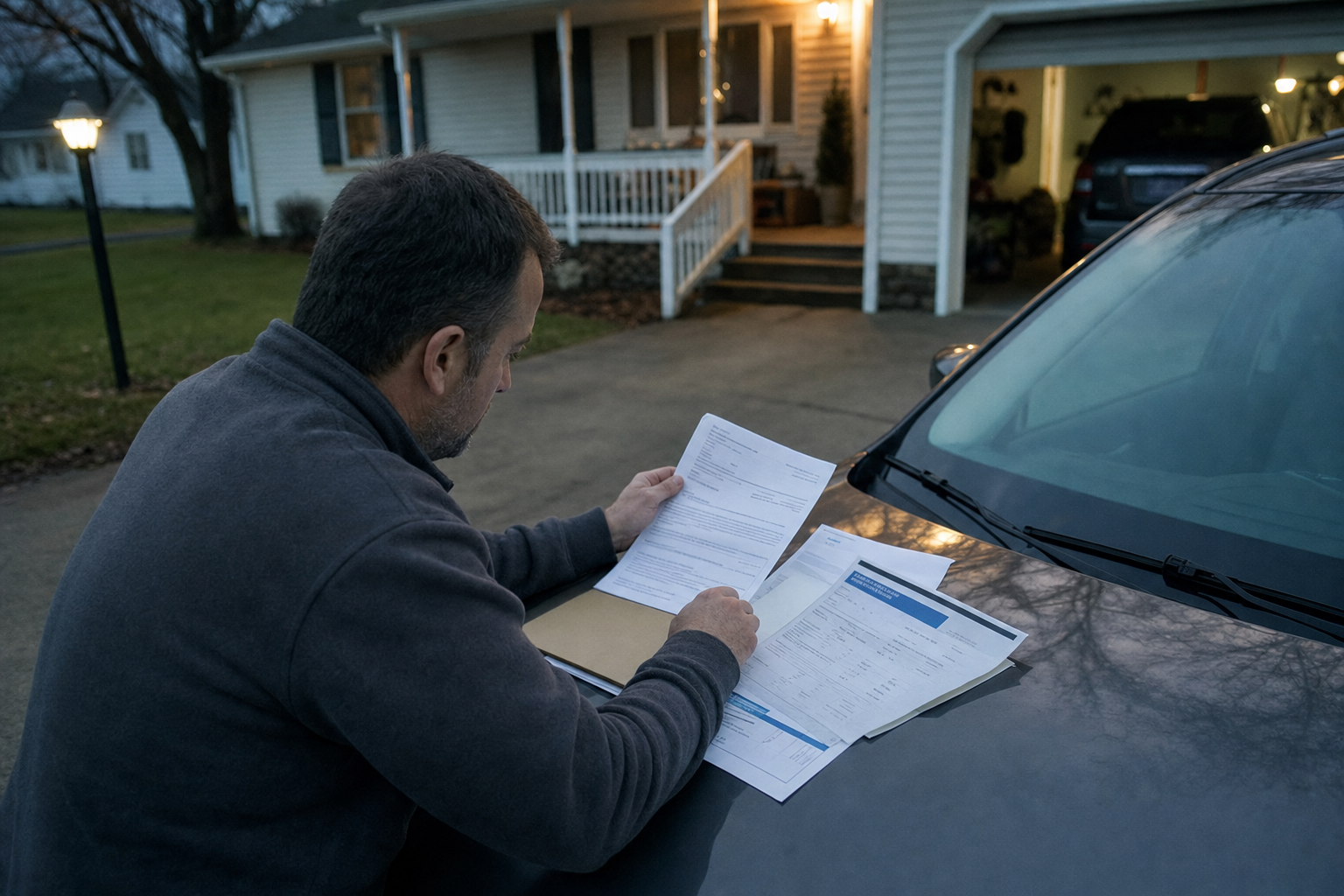
You have a budget, a shortlist of vehicles, and a dealer ready to talk numbers.
The salesperson asks what monthly payment you can afford. That question shifts the conversation away from the car’s actual cost and toward a payment that fits by stretching the loan term or adjusting the down payment.
Obtaining the written out-the-door price—the total figure that includes the vehicle, taxes, dealer fees, and optional products—helps you compare total costs and identify fees.
Keeping the purchase price, trade-in value, and financing as separate discussions prevents one number from masking another.
Written out-the-door quotes from multiple dealers help you compare offers before visiting the dealership.
Reviewing every line item in the contract ensures that the final price matches what you agreed to and that optional add-ons appear only if you want them.
You can decline to proceed and compare other offers before signing.
Another dealer may offer better terms, and you are not required to complete a purchase on the same day.
The monthly payment hides the total cost.
A longer loan term lowers the payment but increases the interest you pay over the life of the loan. Negotiate the vehicle’s final price first, then evaluate financing separately.
Start with the out-the-door price
The out-the-door price is the amount you pay to drive the vehicle home.
It includes the vehicle’s selling price, sales tax, title and registration charges, dealer fees, and any optional products or accessories the dealer has added.
Focusing on the monthly payment allows the dealer to adjust the loan term or down payment to reach a number that sounds manageable.
A lower payment spread over more years means you pay more interest and the loan remains outstanding longer before it is paid off.
Ask the dealer for the out-the-door price in writing.
The document should list the vehicle price, each tax and government charge, every dealer fee, and every optional product separately.
If a line item is unfamiliar, ask what it covers and whether it is required.
Get written quotes from multiple dealers
Contact several dealers and request a written quote for a specific vehicle.
Identify the car by stock number or vehicle identification number when possible, so the quote reflects the exact trim, equipment, and condition.
Use email, phone, or the dealer’s internet-sales department to request the quote before visiting.
A written quote shows the vehicle price, taxes, fees, and add-ons in one place, and you can compare offers without pressure.
Comparing quotes from nearby dealers gives you a baseline.
If one dealer’s price is lower, you can ask another dealer to match or improve it.
The dealer may decline, but the comparison gives you leverage and a clear sense of the market.
Keep the vehicle price, trade-in, and financing separate
Negotiate the new vehicle’s price first.
Once you agree on that number, discuss the trade-in value.
Finally, compare the dealer’s financing offer with a preapproval from a bank or credit union.
Blending these three into one monthly-payment discussion makes it difficult to see whether the vehicle price is fair, the trade-in value is competitive, or the interest rate is reasonable.
Obtain a loan preapproval before visiting the dealership.
The preapproval gives you a comparison point for the dealer’s rate, term, and total repayment.
If the dealer offers better terms, you can accept that financing. If not, you have your own loan ready.
Value your trade-in independently using online tools or by getting a purchase offer from another dealer or buyer.
When the dealer appraises your trade-in, compare that figure with the outside valuation.
If the dealer’s offer is lower, you can negotiate or sell the car separately.
| Negotiation | Separate approach | Bundled approach |
|---|---|---|
| Vehicle price | Agree on out-the-door price first | Hidden in monthly payment |
| Trade-in | Value independently, negotiate after vehicle price | Blended into one number |
| Financing | Compare preapproval with dealer offer | Accepted to reach target payment |
Review every fee and optional add-on
Dealer quotes often include optional products such as extended warranties, service contracts, paint protection, fabric protection, antitheft devices, and vehicle identification number etching.
These items are not required to complete the purchase, and you can decline them.
Taxes, title, and registration charges may be required under applicable state or local law.
Other charges, such as documentation fees or dealer-preparation fees, vary by dealer.
Ask the dealer to explain each line item.
If a charge is labeled as optional or if you do not want the product, request that it be removed from the quote.
The final contract should reflect only the items you agreed to purchase.
Be ready to walk away
You can decline to complete a purchase and compare other offers before signing.
If the final price exceeds your budget, if the dealer will not provide a clear itemized quote, or if the contract includes charges you did not agree to, you can leave and continue your search.
A genuine willingness to walk away strengthens your position.
The dealer knows that you can obtain quotes from other dealers, and that knowledge may encourage a better offer.
Before signing any contract, verify that the document matches every term you negotiated.
Check the vehicle price, taxes, fees, trade-in credit, financing terms, interest rate, loan term, and total amount financed.
- Have you confirmed the out-the-door price in writing?
- Does the contract list every fee and optional product separately?
- Have you compared the dealer’s financing offer with your preapproval?
- Did you verify your trade-in value with an outside source?
- Are you prepared to leave if the numbers do not match your budget?
Negotiating a car price requires preparation, comparison, and attention to the final contract.
Focusing on the out-the-door price and keeping the vehicle purchase, trade-in, and financing as separate discussions helps you understand the true cost and avoid surprises.
Dealer fees, required disclosures, and consumer protections depend on the rules in your state.
For current guidance, consult the Federal Trade Commission, the Consumer Financial Protection Bureau, your state attorney general, or your state motor-vehicle agency.
* Vehicle prices, dealer fees, incentives, financing offers, and tax rates change frequently. Verify current terms with the dealer and consult official sources for the latest consumer protections in your state. Federal Trade Commission