Private Party Auto Loan: How to Finance a Car You Buy From an Individual
What changes when your lender funds a purchase directly from a private seller.
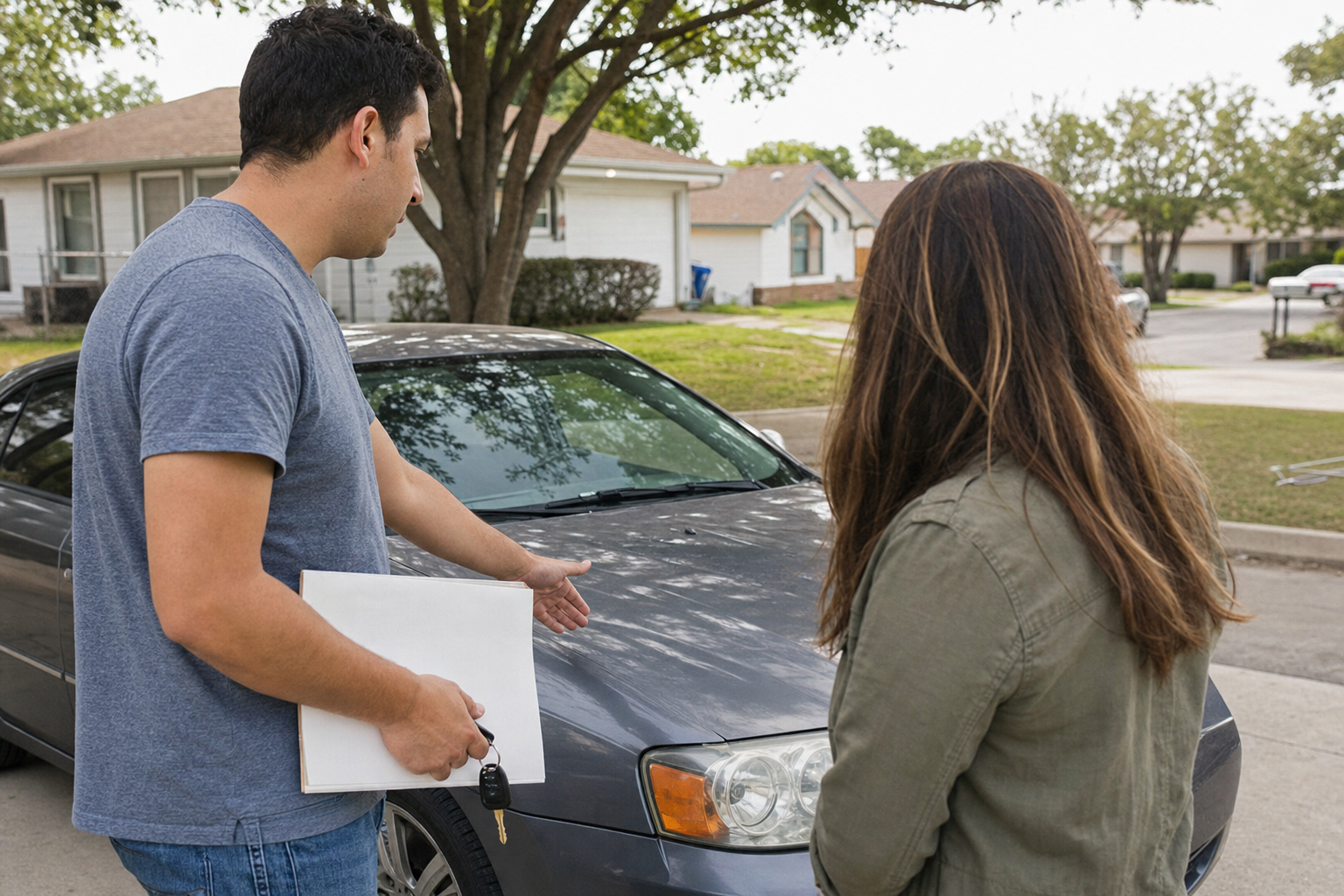
You found the right car in an online listing, agreed on a price with the owner, and now you need to figure out how to pay for it.
A private party auto loan is financing that some lenders offer to help you buy a vehicle directly from an individual rather than from a dealership.
Lenders that provide this financing typically use the car as collateral and establish a security interest that may be recorded through your state’s title system.
Because no dealer is involved, you coordinate the inspection, title transfer, bill of sale, registration, taxes, and insurance yourself.
Not every bank or credit union finances private-party purchases.
Before you agree to buy, contact your lender to confirm it will finance this specific transaction and that the vehicle meets its current underwriting requirements.
The loan exists, but you take on the tasks a dealer would normally handle.
Your lender provides the money and secures its interest in the vehicle. You manage the paperwork, verify the title, arrange the inspection, and complete the state registration process.
What a private party auto loan covers
A private party auto loan finances the purchase price of a vehicle you buy from an individual seller.
The lender evaluates your credit, income, and the vehicle itself, then disburses funds to the seller if you are approved.
The lender becomes the lienholder and keeps a security interest in the car until the loan is repaid.
Once you make the final payment, the lien is released and you receive clear title.
How your lender disburses funds, records its lien, and handles title depends on the institution’s procedures and your state’s motor-vehicle laws.
Ask your lender to explain its specific funding and lien-recording process before you complete the purchase.
Which lenders offer this financing
Banks and credit unions are common sources of private party auto loans, but availability varies by institution.
Some lenders finance only dealership purchases or restrict private-party loans to certain vehicle types, ages, or values.
Before you commit to a vehicle, contact your bank or credit union to confirm it finances private sales and ask about its specific eligibility criteria.
Online lenders may also offer private-party financing, but availability and underwriting standards differ by institution.
Lender policies can restrict vehicle age, mileage, condition, title status, or seller type.
A car that qualifies at one lender may not qualify at another.
Documents and information the lender will ask for
Lenders set their own documentation requirements for private-party auto loans.
Commonly requested information includes the vehicle identification number, year, make, model, mileage, and purchase price.
You may also need to provide the seller’s name and contact information, proof that the seller owns the vehicle, and documentation showing the title status.
On your side, expect to submit proof of identity and authorization for a credit check.
Some lenders also ask for income and employment verification.
| Category | Examples of Information Lenders May Request |
|---|---|
| Vehicle | VIN, year, make, model, mileage, purchase price |
| Seller | Name, contact, proof of ownership |
| Buyer | Identity, credit authorization; income and employment if required |
Exact requirements vary by lender.
Ask for a checklist when you apply so you can gather everything before the approval deadline.
Handling an existing lien on the seller’s car
If the seller still owes money on the vehicle, an existing lien may need to be resolved before you can receive clear title.
How liens are released and titles are transferred depends on your state’s motor-vehicle laws and the procedures of the lenders involved.
In some transactions, lenders coordinate payoff directly with the seller’s existing lienholder to satisfy the outstanding balance and release the lien.
The remaining proceeds, if any, go to the seller.
This payoff coordination protects both parties when the procedures are followed correctly.
Ask your lender how it handles existing liens and what documentation it needs from the seller’s lender.
Do not hand over payment until you confirm the lien will be released and the title will transfer cleanly.
Steps to arrange funding and transfer the title
Start by applying for the loan and submitting all required documents.
Once approved, your lender will provide funding instructions that explain how and when the money will be disbursed.
You and the seller must complete the title-transfer documents required by your state.
The lender will file the necessary paperwork to record its lien on the new title.
Coordinate the timing so that payment and title transfer happen simultaneously.
Some lenders disburse funds only after they receive a signed bill of sale and proof that the title is clear.
After the sale closes, you must register the vehicle, pay any applicable sales tax, and obtain insurance.
These steps are your responsibility because no dealer is processing the transaction for you.
Title transfer, registration, tax payment, and lien recording procedures are set by your state’s motor-vehicle agency.
Check your state agency for the correct process and required forms before you finalize the purchase.
What the buyer must do that a dealer would normally handle
When you buy from a private seller, you take on tasks that a dealership would typically manage.
You arrange the pre-purchase inspection, review the vehicle history report, verify the title is clear, and check for any safety recalls or existing liens.
You also handle the bill of sale, title transfer, registration, tax payment, and insurance setup.
A dealer would process these items as part of the sale; in a private transaction, you coordinate them yourself.
Many buyers choose to have an independent mechanic inspect the vehicle and obtain a vehicle history report before completing the purchase.
Private sellers generally do not provide dealership-level inspection or warranty coverage.
Budget time for these steps.
Arranging financing, inspecting the car, verifying the title, and completing state paperwork can take several days or longer depending on lender processing times and state agency schedules.
- Does your lender finance private-party purchases, and does this vehicle meet its eligibility criteria?
- Is the title clear, or does the seller still owe money that must be paid off before transfer?
- Have you reviewed a vehicle history report and arranged an independent mechanical inspection?
- Do you know which documents your state requires for title transfer, registration, and tax payment?
- Have you confirmed how and when your lender will disburse funds, and does that timing align with the seller’s expectations?
A private party auto loan gives you financing flexibility when you find the right car from an individual seller.
The loan structure is similar to dealer financing, but you coordinate the inspection, title verification, and state paperwork yourself.
Confirm lender eligibility and vehicle requirements early, verify the title and lien status before you pay, and follow your state’s registration process to complete the transaction correctly.
Check your state motor-vehicle agency and your lender’s current policies for the most accurate guidance.
* Lender requirements, vehicle restrictions, and state procedures can change. Confirm current rules with your lender and your state motor-vehicle agency before you buy. For federal consumer-finance guidance, visit the Consumer Financial Protection Bureau.