Financing a Used Car From a Private Seller: What to Know Before You Apply
How to arrange a private party auto loan when you're buying directly from an individual.
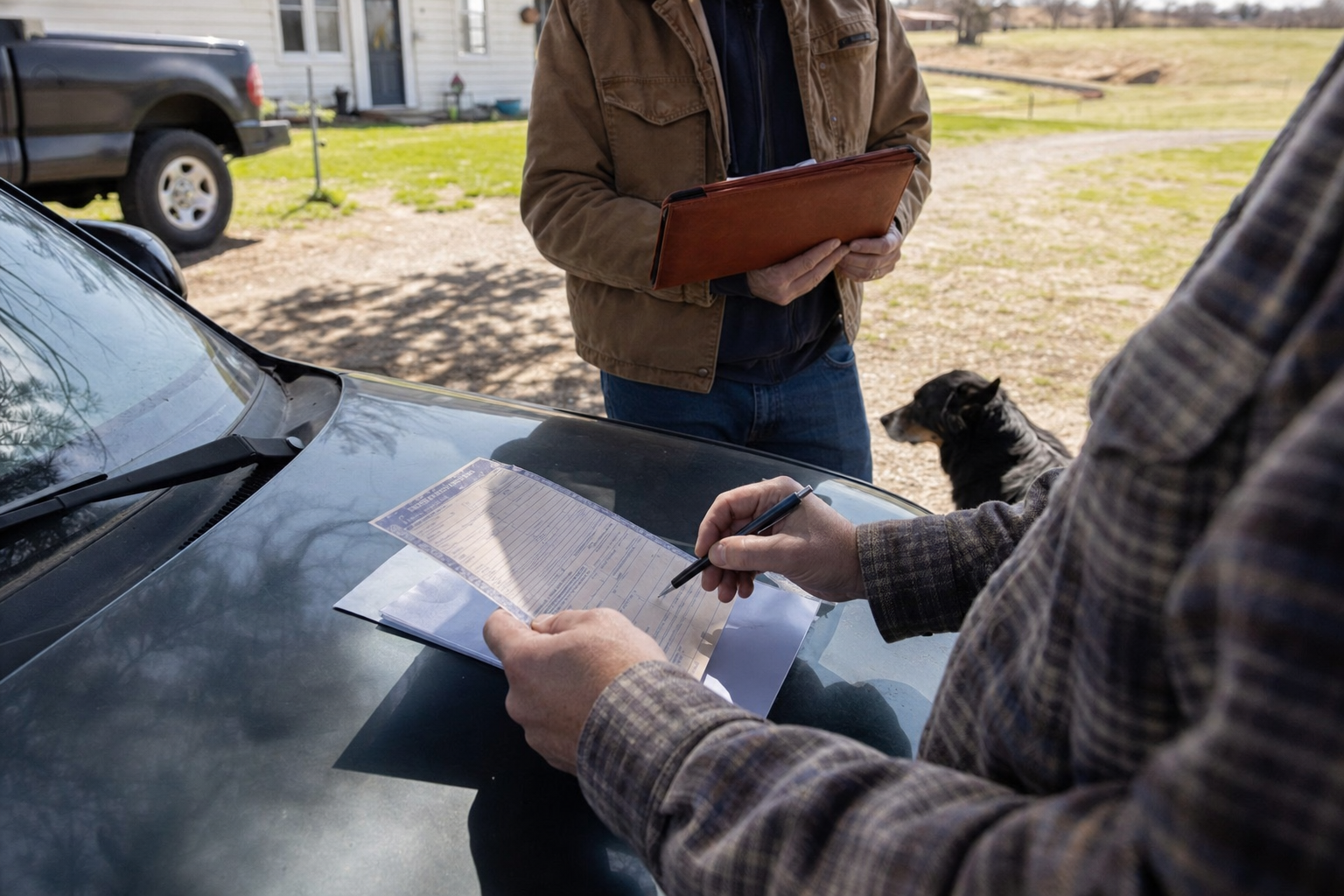
You found a sedan listed by its owner on a local marketplace.
The price is lower than dealer lots, the photos look clean, and the seller agrees to meet you for a test drive.
You want to finance the purchase, but when you call your bank, the representative asks whether you’re buying from a dealer or a private party.
That question matters because lender policies on private-party transactions vary by institution.
A private party auto loan is a product some lenders offer to help you borrow money to buy a car directly from an individual who owns it, rather than from a dealership.
The process requires you to coordinate paperwork, verify the vehicle, and confirm that both the car and the transaction meet your lender’s specific requirements before any money changes hands.
Lender policies on private-party purchases differ.
Before you negotiate a final price or sign a bill of sale, confirm directly with your bank or credit union that it offers this type of loan and that the specific vehicle you want to buy qualifies under its rules.
When You Need a Private Party Auto Loan
A dealership typically handles financing applications, title work, and registration as part of the sale.
When you buy from an individual, those steps fall to you.
Some lenders limit certain loan products to dealer transactions.
If you apply for one of those products and then tell the lender you’re buying from a private seller, the application may be denied or redirected to a different product with different terms.
Check with your lender before you commit.
Ask whether it finances private sales, what documentation it requires, and whether the year, mileage, or condition of the vehicle you’re considering will disqualify the loan.
How the Lender Evaluates the Transaction
Your lender will set its own criteria for approving the loan.
You provide the vehicle identification number, year, make, model, mileage, and the agreed purchase price.
Your lender may ask for specific documentation about the vehicle and the seller’s ownership.
Policies on acceptable vehicle condition, title status, and damage history are set by each institution, so confirm your lender’s underwriting standards before you proceed.
Some lenders ask buyers to obtain an independent pre-purchase inspection by a mechanic.
An inspection can reveal issues that affect your decision to buy and may help satisfy your lender’s requirements.
Coordinating Payment and the Title
Once your loan is approved, ask your lender how it disburses the funds.
Payment methods vary by institution.
If the seller has an outstanding loan, your lender may coordinate payoff directly or provide instructions for you to follow.
Any approved amount above the payoff goes to the seller.
You and the seller then complete the bill of sale and title-transfer documents required by your state.
Your lender will record itself as the new lienholder on the title according to the procedures required by your state’s motor-vehicle agency.
When you finish repaying the loan, the lender releases the lien and you receive a clear title.
Title, lien, and registration procedures are set by state law, so the exact steps and forms depend on where you live.
| Step | Who handles it |
|---|---|
| Vehicle history report | Buyer orders and reviews |
| Pre-purchase inspection | Buyer arranges with independent mechanic |
| Loan application and approval | Buyer submits to lender |
| Title transfer and bill of sale | Buyer and seller complete together |
| Lien recording | Lender files with state agency |
| Registration and plates | Buyer handles at motor-vehicle office |
Documents the Lender Will Ask For
Documentation requirements vary by lender.
Common requests include the VIN, the seller’s name and contact information, and a copy of the current title showing the seller as the registered owner.
Your lender may also want the bill of sale once you and the seller agree on the final price.
On your side, the lender will ask for identification and permission to check your credit.
Depending on the institution, you may need to submit recent pay stubs, bank statements, or tax returns to verify income and employment.
Ask your lender for a complete checklist before you start gathering paperwork.
Before You Agree to Buy
Do not hand over money or sign a purchase agreement until you complete your checks.
Consider ordering a vehicle history report using the VIN to review title history, accident records, and other vehicle background information.
You can also check for open safety recalls by entering the VIN at the National Highway Traffic Safety Administration website at nhtsa.gov/recalls.
Verify that the seller’s name on the title matches the name on their identification.
If the title shows a lienholder, contact that lender to confirm the payoff amount and the release process.
If you choose to arrange a pre-purchase inspection, wait for the mechanic’s report before you commit.
Submit your loan application and wait for written approval that includes the approved amount and funding instructions.
Coordinate with your lender and the seller so that payment, title signing, and lien release happen in the correct order.
Rushing this sequence creates risk that you pay for a car you cannot legally register or that the seller does not receive cleared funds.
- Does the lender explicitly finance private-party sales, or only dealer purchases?
- Does the vehicle meet the lender’s age, mileage, and condition standards?
- Have you verified the title is clear and matches the seller’s identity?
- Did the inspection reveal any issues that would affect the loan approval or your willingness to buy?
- Do you understand your state’s title-transfer, registration, and sales-tax requirements?
A private party auto loan gives you access to vehicles sold by individuals.
The trade-off is that you take on the coordination work a dealership would normally handle.
Confirm lender eligibility early, verify the vehicle and the seller’s ownership thoroughly, and follow your state’s title and registration process step by step.
That preparation turns a complex transaction into a manageable one and protects you from paying for a car you cannot drive legally.
* Lender requirements, vehicle restrictions, and state title procedures change. Confirm current rules with your lender and your state motor-vehicle agency before you finalize any purchase.